Your How to nail studs to bottom plate images are ready in this website. How to nail studs to bottom plate are a topic that is being searched for and liked by netizens today. You can Find and Download the How to nail studs to bottom plate files here. Get all royalty-free photos.
If you’re searching for how to nail studs to bottom plate pictures information connected with to the how to nail studs to bottom plate topic, you have come to the ideal blog. Our site always gives you hints for refferencing the maximum quality video and picture content, please kindly surf and find more enlightening video articles and images that match your interests.
How To Nail Studs To Bottom Plate. For nailing typical 2x studs to a bottom plate or top plate the UBC requires 4 8d common nails two per side of the stud. Remove the bottom plate and vacuum the dust away from the hole. For the length of wall. Once all of the studs are attached to the bottom plate set the top plate on edge and nail it to the studs at the marks.
 Wall Framing Original Details Branz Renovate Frames On Wall Renovations The Originals From pinterest.com
In fact some framing texts Wagner Willis H Modern Carpentry 1976 describe using four 8d toenails most likely again out of a concern to avoid splitting problems. Watch this video and learn the best ins and outs of nailing. Rafter to plate- Toenail three 8-12d Doubled up studs- Face nail 16d staggered every 24 Double top plates- Lap each splice a minimum of 16 and face nail 12-16d staggered every 16 Joist and rafter blocking- Toenail three 8d. Sometimes studs are placed closely next to others on a topbottom plate. Measure and mark your stud placement on both plates and make sure the studs are on the marks when you nail them. Sighting from the edge for the seated angle of the nail you can see where it should start.
Tilt up straight and slide under the beam.
Pry up bottom plate and nail to studs. Once all of the studs are attached to the bottom plate set the top plate on edge and nail it to the studs at the marks. Nail the studs in place one at a time. Sometimes studs are placed closely next to others on a topbottom plate. Generally I lay the plates next to each other with the ends aligned. Or you can use metal framing clips which get nailed at 90 deg to the plates and the studs.
 Source: pinterest.com
Thu Mar 24 2005 251 PM. Drive the screw home and fill the screw hole with putty. Thu Mar 24 2005 251 PM. Sometimes studs are placed closely next to others on a topbottom plate. Add two studs for openings less than 5 wide and one stud for.
 Source: pinterest.com
For nailing typical 2x studs to a bottom plate or top plate the UBC requires 4 8d common nails two per side of the stud. Face nail two on one side. Nailing is very important if not done right walls will com tumbling down. In the case of 3x plates the rule is to use 2 30d nails which are 4 long for commons and 3-34 long for sinkers. Set the drill clutch light so that the screw doesnt strip out.
 Source: ru.pinterest.com
Nail the studs in place one at a time. Cut them to fit position them to make nailing easy and nail them in place. Tilt up straight and slide under the beam. In fact some framing texts Wagner Willis H Modern Carpentry 1976 describe using four 8d toenails most likely again out of a concern to avoid splitting problems. Its two different techniques.
 Source: pinterest.com
Remove the bottom plate and vacuum the dust away from the hole. For the length of wall. Detail plates for studs doors windows and intersecting walls. The studs are nailed by shooting two nail per stud-end thru the bottom plates and thru the top plates. Pry up top plate.
 Source: pinterest.com
The Xs indicate king studs and double lines indicate cripples. Cut them to fit position them to make nailing easy and nail them in place. In the case of 3x plates the rule is to use 2 30d nails which are 4 long for commons and 3-34 long for sinkers. I used 2x6 studs w top and bottom plate. Add two studs for openings less than 5 wide and one stud for.
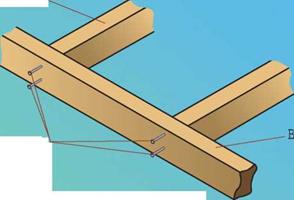 Source: boulderlibrary.net
The straight horizontal line indicates the header. Scatter studs every 16 in. The studs are nailed by shooting two nail per stud-end thru the bottom plates and thru the top plates. C on center or one 3 x131 nail at 12 O. Nail studs to top plate.
 Source: pinterest.com
Step eight With the studs nailed in place align the bottom plate with the floor chalk line. Generally I lay the plates next to each other with the ends aligned. Pry up top plate. Use a stud finder to locate the wall studs and mark their position on the trim piece. C on center or one 3 x131 nail at 12 O.
 Source: pinterest.com
A 3-inch nail or 10d nail would be big enough for most common framing situations. If youre toenailing into the plate then 3 10p is more than sufficient four per stud if your plates arent attached yet and youre building walls that will be stood up then 35 16p 2 per stud nailed through the plate into the bottom of the stud will do the trick. The studs are nailed by shooting two nail per stud-end thru the bottom plates and thru the top plates. Two-by-fours placed between the studs act as firestops in case of a fire inside the wall. Drill deep enough for the entire nail to reach the bottom.
 Source: in.pinterest.com
Drill pilot holes through the bottom plate in the locations you are attaching it to the concrete making sure to penetrate the concrete slightly to mark the locations. Once all of the studs are attached to the bottom plate set the top plate on edge and nail it to the studs at the marks. To avoid splitting the trim countersink the screwhead with a 14-in. If youre toenailing into the plate then 3 10p is more than sufficient four per stud if your plates arent attached yet and youre building walls that will be stood up then 35 16p 2 per stud nailed through the plate into the bottom of the stud will do the trick. Drill deep enough for the entire nail to reach the bottom.
 Source: pinterest.com
Frame up your wall section nail some 16ds about 12way in to both sides of top plate every 2 or so. Drive the screw home and fill the screw hole with putty. Its two different techniques. Face nail two on one side. C on center or one 3 x131 nail at 12 O.
 Source: pinterest.com
Detail plates for studs doors windows and intersecting walls. C on center or one 3 x131 nail at 12 O. C Stagger nails Four 16d common nails or six 3 x131 nails each side of splice in top and double plate Nail over studs to allow plumbers and electricians drills to pass freely through the place between the studs. The other way guys do it is tack the shoesill on edge and face-nail through the bottom of the shoesill and into the stud and then do the same at the top and stand the wall up and. Nail Bottom Plate to Studs.
 Source: pinterest.com
Cut them to fit position them to make nailing easy and nail them in place. Nail Bottom Plate to Studs. Keep in mind that for concrete flooring or foundation you will need to have the bottom plate made from pressure-treated wood. Drive the screw home and fill the screw hole with putty. In the case of 3x plates the rule is to use 2 30d nails which are 4 long for commons and 3-34 long for sinkers.
 Source: johnriebli.com
Add two studs for openings less than 5 wide and one stud for. Nail Bottom Plate to Studs. Tilt up straight and slide under the beam. Nailing is very important if not done right walls will com tumbling down. Remove the bottom plate and vacuum the dust away from the hole.
 Source: pinterest.com
I nail all my shoesills down first and then toe-nail my studs to the top plate and lift the wall up and toe-nail them to the shoesill. Tilt up straight and slide under the beam. Face nail two on one side. Nail Bottom Plate to Studs. Amazon link to Dewalt Framing Nailer Kit we use.
Source: pinterest.com
If youre toenailing into the plate then 3 10p is more than sufficient four per stud if your plates arent attached yet and youre building walls that will be stood up then 35 16p 2 per stud nailed through the plate into the bottom of the stud will do the trick. 16d commons are 3-12 long and 16d sinkers are 3-14 long. Sighting from the edge for the seated angle of the nail you can see where it should start. Rafter to plate- Toenail three 8-12d Doubled up studs- Face nail 16d staggered every 24 Double top plates- Lap each splice a minimum of 16 and face nail 12-16d staggered every 16 Joist and rafter blocking- Toenail three 8d. Two-by-fours placed between the studs act as firestops in case of a fire inside the wall.
 Source: researchgate.net
Set the drill clutch light so that the screw doesnt strip out. Set the drill clutch light so that the screw doesnt strip out. Generally I lay the plates next to each other with the ends aligned. Pry up bottom plate and nail to studs. A 3-inch nail or 10d nail would be big enough for most common framing situations.
 Source: pinterest.com
I nail all my shoesills down first and then toe-nail my studs to the top plate and lift the wall up and toe-nail them to the shoesill. Cut them to fit position them to make nailing easy and nail them in place. Keep in mind that for concrete flooring or foundation you will need to have the bottom plate made from pressure-treated wood. Then predrill the hole with a 18-in. Generally I lay the plates next to each other with the ends aligned.
 Source: renovate.org.nz
Httpsamznto2BIesptIts a 20-Volt MAX XR Lithium-Ion battery cordless brushless 2-speed 33-degree frami. Drill pilot holes through the bottom plate in the locations you are attaching it to the concrete making sure to penetrate the concrete slightly to mark the locations. Thu Mar 24 2005 251 PM. Once all of the studs are attached to the bottom plate set the top plate on edge and nail it to the studs at the marks. Scatter studs every 16 in.
This site is an open community for users to share their favorite wallpapers on the internet, all images or pictures in this website are for personal wallpaper use only, it is stricly prohibited to use this wallpaper for commercial purposes, if you are the author and find this image is shared without your permission, please kindly raise a DMCA report to Us.
If you find this site convienient, please support us by sharing this posts to your preference social media accounts like Facebook, Instagram and so on or you can also bookmark this blog page with the title how to nail studs to bottom plate by using Ctrl + D for devices a laptop with a Windows operating system or Command + D for laptops with an Apple operating system. If you use a smartphone, you can also use the drawer menu of the browser you are using. Whether it’s a Windows, Mac, iOS or Android operating system, you will still be able to bookmark this website.


